
February is National Recreation Therapy Month
February is National Recreation Therapy Month, and we are proud to recognize our Recreational Therapists across Brio Living Services and all the work they do to ensure the older adults we serve age vibrantly.
Recreational Therapy is a vital part of our PACE (Program of All-Inclusive Care for the Elderly) programs, which helps nursing home–eligible adults aged 55+ continue living independently in the homes and communities they love. As part of the PACE Interdisciplinary Team, Recreational Therapists help the older adults we serve to stay active, engaged, and connected.
As we get older and transition into retirement, we often find ourselves with more free time to pursue activities, but we may also encounter age-related barriers to participating, whether that’s loss of dexterity or mobility, changes in cognition, or increased social isolation. Recreation Therapy works with older adults to find alternative ways to stay involved, whether that means learning new techniques to remember how to complete a task, discovering a different method for threading a sewing needle, or using expressive arts as an emotional outlet that promotes connection and relaxation in a way that doesn’t feel like ‘therapy.’
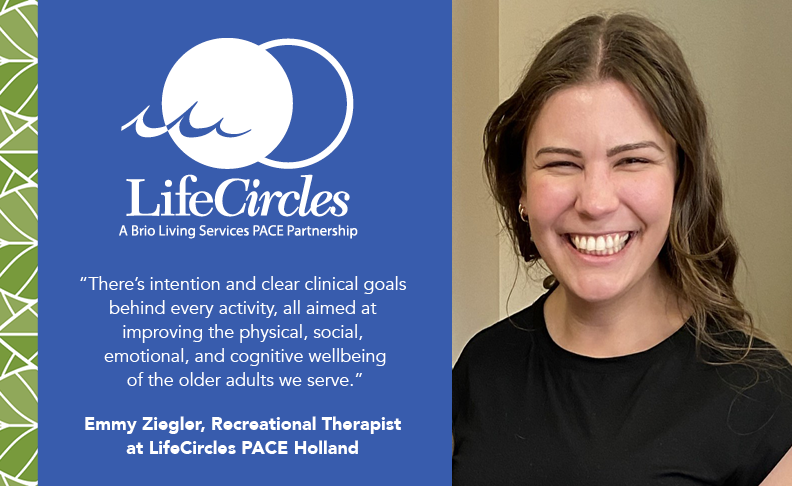
A common misconception about Recreational Therapy is that it’s simply “fun and games” rather than an evidence based therapeutic intervention. When asked how she would respond, Emmy Ziegler, Recreational Therapist at LifeCircles PACE in Holland, explains that while keeping interventions enjoyable and aligned with each participant’s interests is important for engagement, it’s only one part of what Recreation Therapists do. “There’s intention and clear clinical goals behind every activity, all aimed at improving the physical, social, emotional, and cognitive wellbeing of the older adults we serve.”
She adds that RTs work closely with other PACE disciplines, like physical and occupational therapy, using creative problem solving to help participants integrate what they’re working on in therapy into their daily lives in practical, consistent ways, supporting them in finding and continuing activities they enjoy and that bring enrichment to their lives.
“It’s been really eye opening to see just how much change small things can invoke,” says Emmy. She recalled a story about a participant who kept scheduling and canceling surgeries because her anxiety was so overwhelming, exacerbated by a lack of support system, stable housing, and consistency in her life. After trying several approaches, they introduced her to a robotic cat companion. “To our pleasant surprise, she ended up loving it. She named it, cared for it, and thought of it as the one stable thing she could count on.”
Although it wasn’t a complete solution to the challenges she was facing, the robotic cat gave her a renewed sense of responsibility and purpose. It motivated her to start doing what was best for herself, including finally going through with the surgery she had been putting off for so long. The participant told staff, “I know this will be here when I get back. It’s something stable, something I can hold onto.”
“From there,” Emmy says, “we also started to see her housing placement stabilize, as having a companion to confide in led to fewer complaints to our partnering facility.”
This shift highlights how a small intervention or simple activity can ripple outward, creating meaningful impact across many areas of a participant’s life. “This participant was then able to begin meeting for coping skills sessions, using her cat as an emotional support throughout both the educational and behavioral health sessions.”
To learn more about PACE programs at Brio Living Services and the interdisciplinary team who cares for each participant, please visit https://mybrio.org/medicare-pace-program-michigan/.
This blog is sponsored by Barb and Tom Jackoboice, Live Life with Brio Bronze Sponsors! Your thoughtful gift brings joy to the older adults we serve and our team members.